Minecraft is changing its versioning system — no, seriously.
After over a decade of game releases, from 1.8 to 1.21, Mojang is officially switching it up. Rather than the standard system, it will now be numbered based on the year. This starts in 2026 and some users have expressed their views on the matter. A few claim this is unnecessary, while others think this is a great change. It may make things easier to read, but certainly will confuse players at the beginning. In this Apex Hosting blog, we’ll breakdown everything you need to know about the new numbering system for Minecraft 👏
Why Mojang Changed the Numbering System
Back when major updates arrived once a year, version numbers like 1.17, 1.18, and so on worked fine. However, with the introduction of game drop – Spring to Life, Chase the Skies, The Copper Age, keeping up with the version numbers was overwhelming.
This also gets more confusing when you compare Bedrock & Java Edition: 1.21.50 vs. 1.21.4. It’s the exact same content, but with completely different version numbers. Due to this, a growing number of players like creators, modders, and hosters wanted it to be cleaned up.
Minecraft Numbering System Breakdown
Starting with all releases in 2026, Minecraft versions will begin with the year.
That means every update next year starts with 26, followed by:
- Release number (which game drop it belongs to)
- Patch or hotfix number
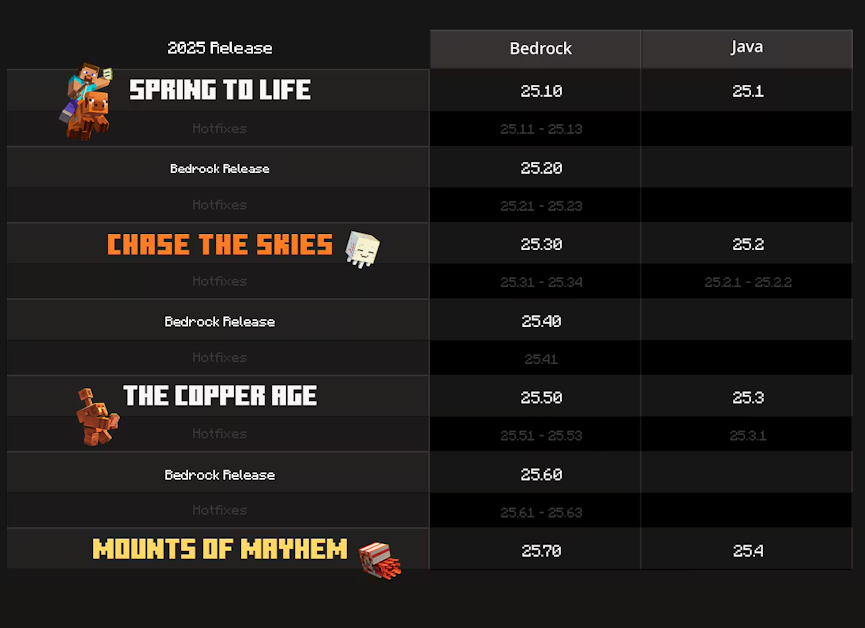
Example: 25.4 (Mounts of Mayhem Update)
Both Java and Bedrock get the same year prefix, but each edition continues using its own release cadence afterward. Bedrock ships more frequent updates, while Java splits patches into their own decimal place.
Snapshots are getting streamlined too. Instead of “25w41a,” you’ll see targeted names like 25.4-snapshot-1, making it easier for creators to link snapshots to specific game drops. All previous snapshots and game versions will remain using the old version numbering system.
Here’s an official breakdown by Mojang that may help you better understand the changes.
What This Means for Your Server
For players, not much changes. For server owners and modded communities? This is a win.
- Faster version identification
- Clearer compatibility for modpacks and plugins
- Cleaner update workflow
- No more confusion when Bedrock and Java drift apart numerically
Apex Hosting will continue supporting every new version the moment it drops – now with even clearer versioning to help you stay organized. The only downside is that many players have already been used to the same numbering system they’ve been using for years.
This change can drastically confuse people, but only at the start. Once they begin to use and understand the new version numbering system for Minecraft, it won’t be problematic anymore.
New Numbering System – Good or Bad?
Now for the real question, is the new change good or bad for Minecraft? If you glance online and in the community, there’s good points on both sides. For instance, while it will help clean up the version numbers, we now have a split in Minecraft updates. People will still refer to 1.21 as … well 1.21, but newer versions will be referred to as 26.1 or something similar.
There are two factions, a side that says this is a good change and another that thinks it’s more confusing than helpful. No matter which group you’re with, Mojang has already rolled out this change. Now we have the new version numbering system for Minecraft, so be on the lookout in 2026 – that’s when it starts.