Overview
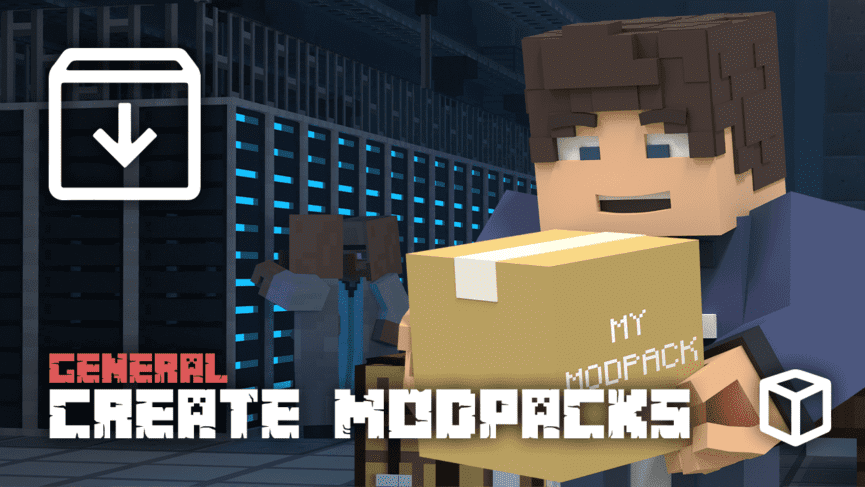
You’ve tried dozens of modpacks but none of them have exactly the right combination of mods. Maybe one pack has the tech mods you want but skips the exploration content, or another loads your game with 300 mods when you only need 20. Building your own modpack fixes that problem. You pick the mods, the modloader, and the version, then package everything for friends or your server.
This guide covers three ways to make a custom Minecraft modpack: CurseForge (the fastest option), Prism Launcher (open-source with both CurseForge and Modrinth mod access), and the standard MC Launcher (for manual control). Each method ends with export steps so you can share the pack or upload it to a Minecraft server.
Creating a Modpack with CurseForge

CurseForge is the most popular modpack manager and has the largest mod library. Before proceeding, download and install the CurseForge launcher for your operating system. Once completed, open the app and confirm you are on the “Minecraft” tab in the left-hand menu.
- From the
My Modpackssection, pressCreate Custom Profileat the top. - Fill out the profile name, versions, and game type information, then press
Create.
- Once configured, click your new profile icon, followed by “Add More Content”.
- Within the list of mods, locate and click
Installon each one you desire.
- (Optional) Add Resource Packs or manually install extra mods.
- After this is complete, return to your modpack page and press “Play” to test it.
When testing the pack, confirm there are no crashes on startup or during gameplay. This is a good chance to tweak in-game options, enable resource packs, and adjust performance settings. If the pack runs well and you want to share it, proceed to export the modpack files below.
Exporting a Modpack Profile
CurseForge has a built-in profile exporter that bundles your modpack into a single .zip file. Other players can import this directly into their own CurseForge launcher.
- From the CurseForge app, select your modpack profile.
- To the left of the
Playbutton, press the 3 dots and select theExport Profileoption.
- Confirm the name, enter any version number, then select the files and folders.

Note: Extra folders can be included, such as resource packs, shaders, options, etc.
- Press
Export, then save the .zip file to a safe location for later.
Other players can install this modpack by creating a new profile on their CurseForge launcher and selecting “Import” instead of “Create“. This lets them select your .zip file, which installs automatically on their system.

Exporting CurseForge Files
If you need to share files with players who don’t use the CurseForge launcher, you can manually export the profile folder instead.
- From your modpack profile page, press the 3 dots next to the
Playbutton. - Press
Open Folder, then access the newly-opened window.
- Select the files and folders you wish to share, including
modsandconfig. - Using a program like WinRAR or 7ZIP, zip your selection.

- Move this new .zip file to a safe location for later, such as your desktop.
Players receiving this file will need to unzip it into a new CurseForge profile folder or into the directory of their preferred launcher.
Creating a Modpack with Prism Launcher
Prism Launcher is a free, open-source alternative that connects to both the CurseForge and Modrinth mod libraries from a single interface. It runs on Windows, macOS, and Linux.
Download Prism Launcher from its official site and sign in with your Microsoft account. Click “Add Instance” in the top-left corner, choose your Minecraft version, and select a modloader (Forge, NeoForge, Fabric, or Quilt) from the modloader tab. NeoForge is the recommended choice for modded content on Minecraft 1.20.5 and newer, while Fabric remains the standard for performance and utility mods.
After creating the instance, right-click it and select “Edit.” Under the “Mods” tab, search and install mods directly from CurseForge or Modrinth without leaving the launcher. Prism handles dependency resolution automatically, so required library mods get pulled in when you install a mod that needs them.
To export, right-click your instance and select “Export Instance.” Prism supports both CurseForge .zip and Modrinth .mrpack formats, so pick whichever your friends need. The .mrpack format works natively with the Modrinth App and other Prism Launcher users.
Creating a Modpack with the MC Launcher

The standard Minecraft launcher gives you direct control over your mod files but requires managing everything by hand. This method works with any modloader: Forge, NeoForge, or Fabric. NeoForge is a community fork of Forge and the default choice for major modpacks on Minecraft 1.20.5 and newer. You can install Forge client-side or grab NeoForge from the official NeoForge site. To find Minecraft mods compatible with your modloader, check CurseForge or Modrinth.
- Install either Forge or Fabric to your system.
- Download any desired Minecraft mods that match the modloader.

- Open the MC launcher, then proceed to
Installationsat the top. - Hover over your modded profile, then click the
Open Foldericon.
- In the new window, enter the
modsfolder, then paste your desired mod files. - Once completed, launch the game to check for potential issues.
Manual modpack creation has more room for error; mod conflicts, missing dependencies, and version mismatches are common when every file is added by hand. Check your crash logs if something breaks, and verify that every mod targets the same Minecraft version and modloader before troubleshooting further.
Exporting Modpack Files

Exporting from the MC Launcher works the same way as the manual CurseForge export. Use the “Open Folder” icon in the “Installations” tab to access your profile directory, then add the mods, config, and any other relevant folders to a .zip file using WinRAR or 7-Zip.
Adding the Pack to a Server
Running your modpack on a modded Minecraft server lets everyone connect without manually installing the pack themselves. The server needs the same modloader and Minecraft version as your modpack, and all server-compatible mods must be uploaded to the server’s mods folder.
Uploading Files via FTP
The fastest way to move modpack files to a server is through FTP. Connect via FTP to your Apex Hosting server, then upload the contents of your mods and config folders to the matching server directories. Make sure the server jar version matches your modpack exactly: a Forge 1.20.4 modpack requires a Forge 1.20.4 server, and a NeoForge pack requires the same NeoForge version on the server. Mismatched versions cause startup failures every time.
Removing Client-Side Mods
Not every mod in your pack belongs on the server.
Client-side mods like OptiFine, Sodium, Iris Shaders, shader packs, minimap mods (JourneyMap, Xaero’s), HUD overlays, and sound mods (Ambient Sounds, Sound Physics) will cause crashes or errors if you leave them in. Remove these from the server’s mods folder before starting. Check the mod’s CurseForge or Modrinth page for an “Environment” tag to confirm whether it is client-side, server-side, or both.
Memory and Performance
Modpacks need more RAM than vanilla Minecraft. A light pack with 10-20 mods runs fine on 4 GB. But larger packs, especially those with 50+ mods or world generation overhauls, should have 6-8 GB allocated. On Apex Hosting, you can adjust the server RAM from the control panel without stopping the server first. If players experience lag or the console shows garbage collection warnings, increase the allocation by 1-2 GB.
For a full walkthrough on server setup, see the guide on how to install your custom modpack on a server.
Distributing the Modpack
Sharing your finished modpack depends on who you want to reach. Public platforms give the widest audience, while direct file sharing works better for a small group of friends.
CurseForge Publishing

CurseForge is the largest modpack distribution platform. Log into your CurseForge account, visit the modpacks section, and press “Start Project” to begin the submission process. CurseForge reviews all uploads before they go public, so allow a few hours for approval.
Modrinth Publishing
Modrinth has grown into a major alternative to CurseForge, with many mod authors publishing to both platforms. Create an account on modrinth.com, then click “Create a Project” to upload your modpack. Modrinth accepts both standard .zip files and its own .mrpack format. Packs published here are automatically available in Prism Launcher and the Modrinth App.
Technic Publishing

The Technic Platform distributes modpacks through the Technic Launcher. Log into your Technic account dashboard to submit your pack. Technic uses its own format, so you will need to follow their specific upload process rather than reusing a CurseForge or Modrinth export.
Direct File Sharing


If you would rather skip public platforms, share the .zip file directly with your group. Dropbox, Google Drive, and other cloud storage services all work for this. Upload the modpack file, create a share link, and send it to anyone who needs it. Recipients then import the file into CurseForge, Prism Launcher, or drop it manually into their launcher’s mod directory.
Common Issues
When choosing which files to export from your CurseForge profile, make sure each desired option is checked before proceeding. These may include the options.txt file, resourcepacks, shaderpacks, or anything else the pack needs. Every file you select goes into the pack .zip, so verify your selections carefully.
Manual mod installation has several common failure points. Missing dependency mods, incompatible versions, and direct mod conflicts all cause crashes. Check your local log files for specific error messages. The crash report usually names the mod causing the problem.
Server startup failures after a modpack upload are usually caused by a version mismatch or client-side mods in the server files. Confirm that the server version matches your modloader and Minecraft version exactly. So check the server console for any mods listed as crash causes. Client-only mods like OptiFine, Sodium, Ambient Sounds, and shader packs must be removed from the server’s mods folder before starting.
Helpful Links
- CurseForge Launcher Download
- How to Install Forge (Client Side)
- How to Install Fabric (Client Side)
- How to Find Minecraft Mods
- Prism Launcher
- Modrinth
FAQ: Creating and Using a Minecraft Modpack
How Do I Make a Minecraft Modpack?
Use the CurseForge launcher to create a custom profile and install mods from its built-in library. Prism Launcher is an open-source alternative with access to both CurseForge and Modrinth mods. You can also build a modpack manually by installing Forge, NeoForge, or Fabric and adding mod files to the mods folder.
Can I Upload a Custom Modpack to a Minecraft Server?
Yes. Export your modpack’s mods and config folders, then upload them to the server via FTP. The server must run the same modloader and Minecraft version as your pack. Remove any client-side mods (OptiFine, Sodium, minimaps) from the server’s mods folder before starting.
What Is the Difference Between CurseForge and Manual Modpack Creation?
CurseForge handles dependency management, mod updates, and exporting in a guided interface. Manual creation gives full control over file placement but requires you to track dependencies, versions, and compatibility yourself.
How Do I Share a Modpack with Friends?
Export your modpack as a .zip or .mrpack file and share it through Google Drive, Dropbox, or a similar service. Friends can import CurseForge profiles directly through the CurseForge launcher, while .mrpack files work with Prism Launcher and the Modrinth App.
Why Is My Modpack Crashing After Launch?
Mod conflicts, missing dependencies, and version mismatches are the most common causes. Open your crash report or latest.log file to find the specific mod triggering the error, then check that every mod in your pack targets the same Minecraft version and modloader.
Which Mods Cannot Be Used on Servers?
Client-side mods like OptiFine, Sodium, Iris Shaders, minimap mods, HUD overlays, and sound mods don’t work on servers and can cause crashes. Remove these from the server’s mods folder before starting. Check the mod’s CurseForge or Modrinth page for an “Environment” tag to confirm.